
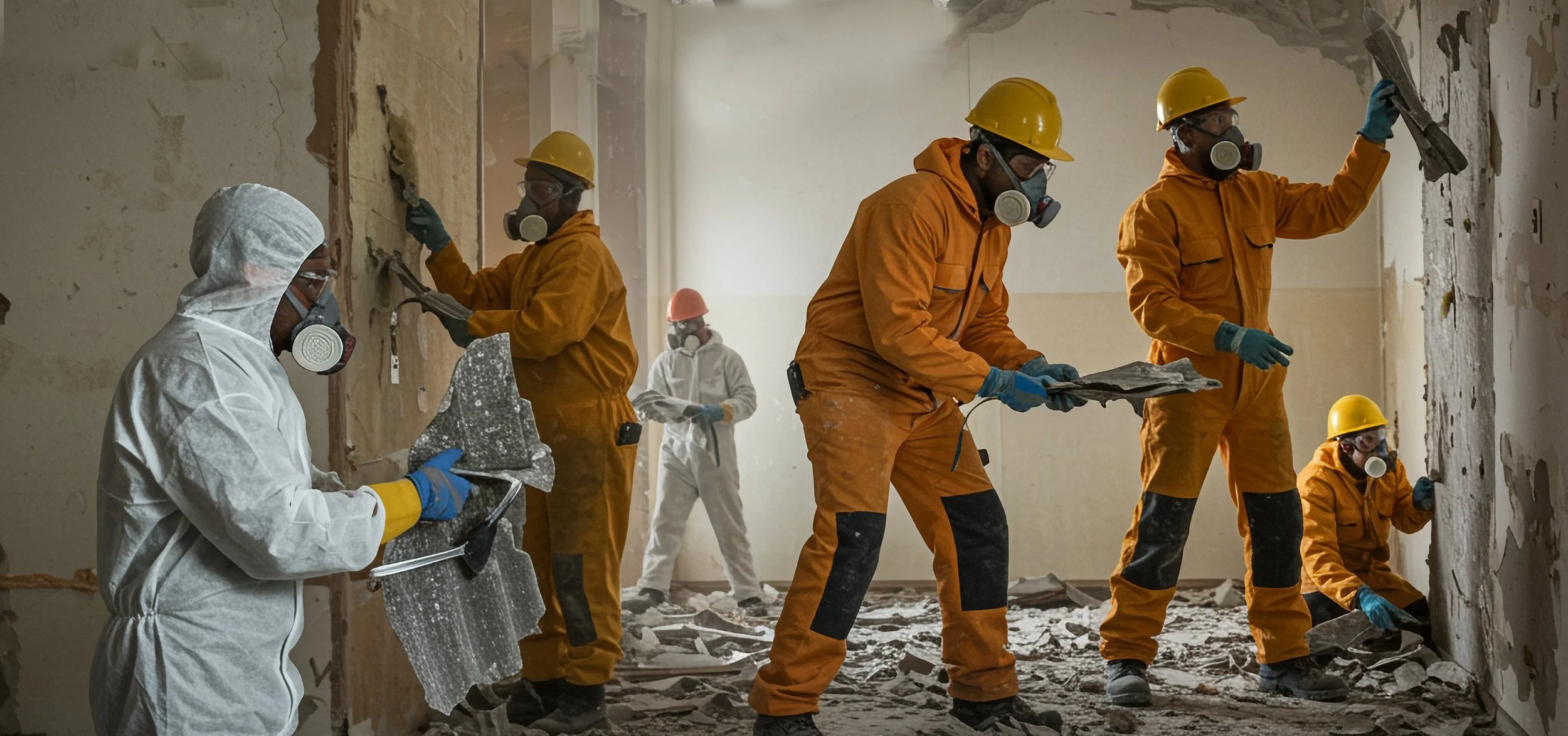
Asbestos Abatement
Doing it efficiently and expeditiously.
What Is Asbestos?
Asbestos is a natural mineral that is resistant to heat and corrosion. It was widely used in building materials like sheetrock, insulation, floor tiles and roofing material.
What Are the Health Effects of Asbestos Exposure?
Breathing in asbestos can lead to trapped fibers in the body. Over time, these fibers can cause inflammation and scarring, leading to severe health conditions. Asbestos can cause various cancers, including mesothelioma, lung, laryngeal and ovarian cancers, as well as noncancerous lung conditions. You wouldn't want your kids/family to breath this in.
Here's a breakdown of what asbestos abatement entails
Asbestos abatement involves safely removing or mitigating asbestos-containing materials (ACMs) to prevent the release of harmful fibers into the air. The process typically involves inspection, containment, removal or encapsulation, cleaning, and air testing.
1. Inspection and Assessment: A qualified professional inspects the area to identify ACMs and assess their condition.
2. Containment: The work area is isolated using plastic sheeting and negative air pressure equipment to prevent asbestos fibers from spreading.
3. Removal or Encapsulation: Trained workers either remove the ACMs using specialized tools and wet methods or encapsulate them with sealants to prevent fiber release.
4. Cleaning: The work area is thoroughly cleaned using HEPA vacuums and other methods to remove residual asbestos fibers.
5. Air Testing: A third-party air sampler, tests the area to ensure that asbestos levels are below permissible limits before containment measures are dismantled.
6. Disposal: Asbestos waste is double-bagged in specially labeled waste bags and disposed of at licensed landfills.
7. Decontamination: Workers and equipment are decontaminated to prevent the spread of asbestos fibers outside the work area.
Types of Asbestos Abatement:
Removal: Physically removes ACMs from the building.
Encapsulation: Seals or covers ACMs to prevent the release of fibers.
Enclosure: Placing something over or around ACMs to prevent fiber release.
Safety Precautions:
Worker Safety:
Workers wear personal protective equipment (PPE) like respirators, protective clothing, and gloves.
Contamination Control:
The work area is sealed off, and negative air pressure is maintained to prevent the spread of asbestos fibers.
Waste Management:
Asbestos waste is properly bagged, labeled, and disposed of.
Air Quality Testing:
Air quality is tested to ensure that asbestos levels are below safe limits.
The Asbestos Abatement Process: What to Expect
The process of removing or mitigating the effects caused by this mineral is called asbestos abatement, but the first step is an in...
RPF Environmental
The Difference Between Asbestos Abatement and Remediation
Jun 8, 2023 — The process of removing hazardous materials is called abatement. It mostly includes removal but can also include encapsulants
Clean Management
Asbestos Handling Laws | Process for Removal & Disposal
A licensed professional will perform a visual inspection of the area first for any potential hazards. Then, asbestos abatement contractors remove the material and package it securely in sealed, labeled containers.